
Magnetic paint turns a plain wall into a useful surface for notes, art, and planning.
What is Magnetic Paint?
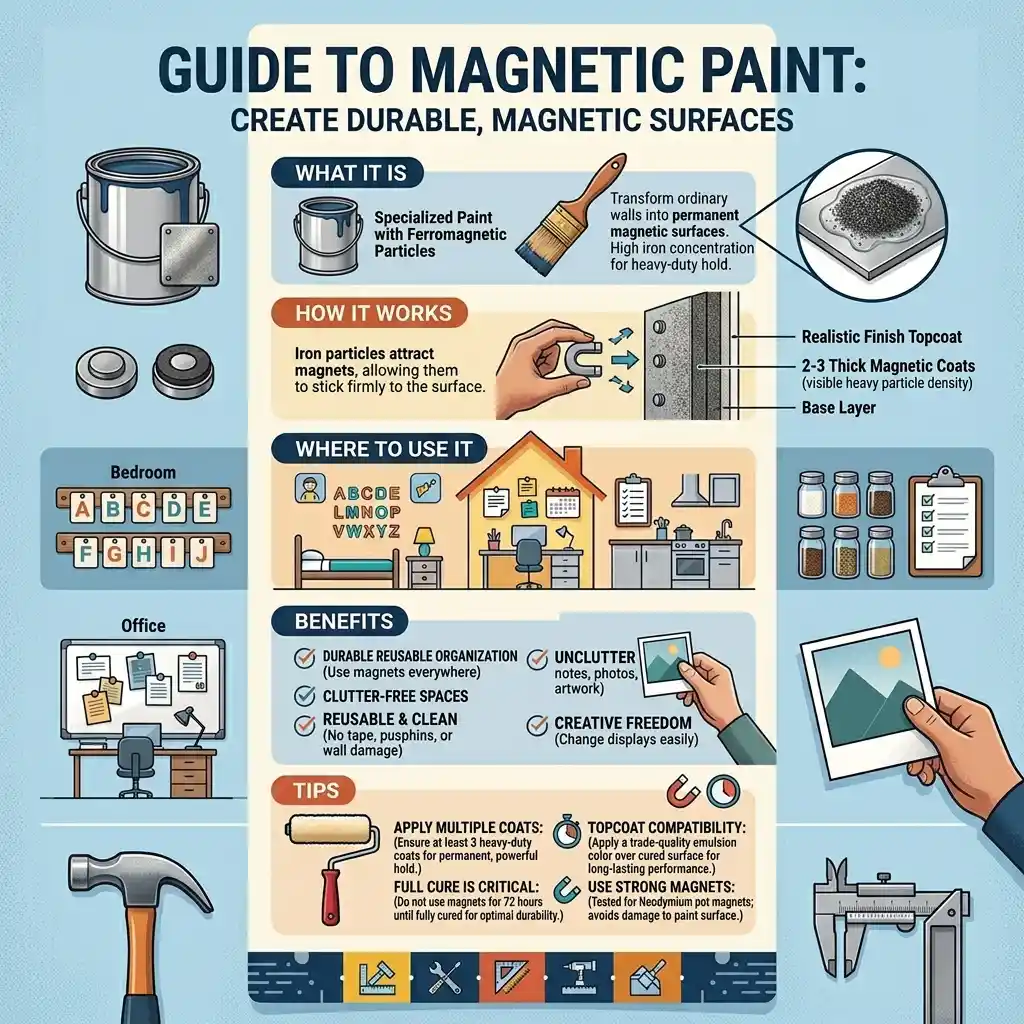
Magnetic paint is a special type of wall coating. It is made by mixing very fine iron particles with a water-based paint base. When you put it on a wall, the iron particles settle into a thin metal layer as the paint dries.
The dried paint does not look shiny or metallic. It looks just like a normal dark grey primer. The big difference is that magnets can now stick to it, just like they stick to your fridge door.
You can apply any colour of regular interior paint on top. This way, the magnetic layer stays hidden, and the wall looks exactly how you want it to. Once dry, you can put up notes, photos, drawings, or planning sheets with simple magnets.
MIIPL has been making magnetic products for more than 20 years. Our magnetic paint is used by homeowners, schools, architects, and large companies across India.
Quick fact: One square metre of magnetic paint holds hundreds of small neodymium magnets when applied in four coats. This is enough to hang children’s artwork, calendars, or a full wall of project notes.
How Magnetic Paint Works
The science behind magnetic paint is simple. The paint carries tiny iron particles in a liquid binder. When the paint dries, these iron particles stay locked in the wall. They form a surface that magnets can pull towards.
The Role of Iron Particles
Each coat of magnetic paint adds another layer of iron particles. The more layers you add, the denser the metal bed becomes. A denser bed means a stronger pull for the magnet placed against the wall.
Why Layering Matters
A single coat is too thin. Magnets will not hold firmly. Four coats give a thick enough iron layer for everyday use. If you want to hold heavier items like tool holders or thick folders, you can add a fifth or sixth coat.
The Magnet, Not the Paint
Remember: the paint is not a magnet. It only acts as a metal surface. You still need a real magnet to stick anything to the wall. The paint just gives the magnet something to hold on to.
How Magnetic Paint Works
Step 1: Apply Magnetic Paint
↓
Step 2: Paint Dries
↓
Step 3: Magnets Stick to Surface
Main Features of MIIPL Magnetic Paint
- Water-based formula: Easy to clean, low smell, and safe for indoor use.
- High iron content: Gives a strong hold even with regular neodymium magnets.
- Smooth finish: Layers evenly with a foam roller and does not leave rough patches.
- Works on many surfaces: Use on drywall, plaster, wood, plywood, and primed metal.
- Topcoat friendly: Cover it with any water-based interior emulsion in your chosen colour.
- Long shelf life: Properly sealed tins stay usable for up to 12 months.
A small study corner becomes much more useful with a magnetic wall.
Benefits of Magnetic Paint
Why do people pick magnetic paint over a regular pin-up board? The answer is simple: it gives you a working surface without changing how the room looks.
- No drilling required: The wall stays smooth, and there are no holes to fill later.
- Reusable surface: Move your notes, photos, or charts any time. Nothing is permanent.
- Clean look: No more messy tape marks or pin holes on the wall.
- Space saving: You do not need a separate board taking up floor space.
- Kid-friendly: Safe for children’s rooms. Use magnetic letters and toys.
- Easy to repaint: Change the wall colour any time without losing magnetic function.
Benefits of Magnetic Paint
📝Easy Organisation
🚫No Drilling
🔄Reusable Surface
✨Clean Appearance
💾Space Saving
Where Magnetic Paint Can Be Used
Magnetic paint fits in many places. The most common ones are listed below.
Magnetic Paint for Offices
Meeting rooms feel more open when the whole wall is magnetic. Teams can pin up project sheets, swap ideas, and change layouts in seconds. No more whiteboards getting cluttered or smudged.
You can paint the back wall of a cabin too. Use it to pin calendars, certificates, or task boards. MIIPL supplies in bulk to many office fit-out projects across Delhi, Mumbai, Bengaluru, and Hyderabad.
Magnetic Paint for Schools
Classrooms love magnetic paint. Teachers can put up charts, weekly timetables, and student work without damaging the wall. Children can use magnetic letters and numbers for play-based learning.
Many preschools and activity centres in India now use magnetic paint on full feature walls. It is a strong, safe, and long-lasting choice for busy classrooms.
Magnetic Paint for Homes
At home, the uses are endless. Make the kitchen wall into a family notice board. Turn a small corner of the kid’s room into a play and learning zone. Use it in the study area for revision charts.
It also works well in a pooja room, entrance foyer, or even behind the TV to hide small magnets for tools and remote controls.
Magnetic Paint for Retail Stores
Retailers use magnetic paint to change display signs, price tags, and offers quickly. No more tape marks on the wall. Staff can update the display in minutes.
Showrooms for tiles, paints, and home décor also use it. Customers see one clean wall that holds product samples in place.
Where Magnetic Paint Is Used
Home
Office
School
Retail
Exhibition

A classroom wall becomes an interactive learning space with magnetic paint.
Magnetic Paint vs Traditional Paint
Normal wall paint only adds colour. Magnetic paint adds colour and function at the same time. Here is a quick comparison.
Quick Comparison
| Function | Magnetic paint gives a metal-rich base that holds magnets. Regular paint does not. |
| Coverage | Magnetic paint needs 3 to 4 coats. Regular paint needs 2. |
| Cost | Higher per litre, but it replaces boards, pins, and tape. |
| Topcoat | Cover with any emulsion. Thin layers keep the pull strong. |
| Look | Both can look the same once the final colour is on. |
How to Apply Magnetic Paint
Follow these steps for a strong, long-lasting magnetic surface.
- Prepare the wall: Fill holes, sand rough spots, and wipe the wall clean. Apply a water-based primer and let it dry.
- Stir the paint well: Iron is heavy and sinks to the bottom. Stir for five minutes before you start, and again every 10 to 15 minutes while you work.
- Use a foam roller: A short-nap foam roller gives the smoothest finish. Roll in one direction for an even coat.
- Apply 3 to 4 coats: Let each coat dry for 2 to 4 hours. Lightly sand between coats if you see rough patches.
- Wait 24 hours: Let the final magnetic layer cure fully before you add colour on top.
- Add the topcoat: Use a thin layer of interior emulsion. Two thin coats work better than one thick coat.
- Use neodymium magnets: They are small but hold firmly. Avoid weak plastic fridge magnets.
Common Mistakes to Avoid
- Skipping the stir: If the iron is not mixed in, the paint will not work.
- Too few coats: One or two coats give very weak hold. Stick to at least three.
- Thick topcoat: Heavy layers of regular paint block the magnetic pull. Keep it thin.
- Using weak magnets: Old fridge magnets will slide down. Buy neodymium magnets.
- Painting on a dusty wall: Dust stops the paint from sticking. Clean the wall before you start.
Maintenance Tips
- Wipe the wall with a soft, dry cloth. Do not use harsh chemicals.
- Avoid scrubbing the magnetic area. Gentle cleaning keeps the iron layer safe.
- If you want to repaint, sand the old topcoat lightly, then add a new colour. The magnetic layer stays as it is.
- Check magnets often. Old or weak magnets may slip. Replace them with fresh neodymium ones.
Frequently Asked Questions
1. What is magnetic paint?
Magnetic paint is a water-based paint that contains fine iron particles. Once dry, it forms a surface that magnets can stick to.
2. Is magnetic paint safe for indoors?
Yes. MIIPL magnetic paint is water-based with low VOC. It is safe for homes, schools, and offices when applied with proper ventilation.
3. How many coats of magnetic paint do I need?
Apply at least three to four coats. More coats give a stronger magnet grip. Let each coat dry before the next one.
4. Can I paint any colour over magnetic paint?
Yes. Use a water-based interior emulsion. Keep the topcoat thin so the magnetic pull stays strong.
5. What magnets work best on magnetic paint?
Neodymium magnets are best. They are small but very strong. Cheap fridge magnets usually do not hold well.
6. Where can I use magnetic paint?
Use it in homes, offices, schools, retail stores, and exhibition spaces. It works on most flat, primed surfaces.
7. How long does magnetic paint take to dry?
Each coat takes 2 to 4 hours to touch-dry. Wait 24 to 48 hours after the last coat before adding the topcoat.
8. Is magnetic paint available across India?
Yes. MIIPL supplies magnetic paint to all major cities and ships in bulk to dealers, contractors, and project sites.
9. Can I apply magnetic paint on wood or plywood?
Yes. Sand the surface, apply a primer, then add three to four coats of magnetic paint. Make sure the wood is clean and dry.
10. What is the price of magnetic paint in India?
Price depends on quantity and order size. Contact our sales team for a current quote. Bulk rates are available.
Recommended Image Files for This Page
- magnetic-paint-wall-application.webp — Office wall with magnetic paint holding project sheets.
- magnetic-paint-home-use.webp — Magnetic paint in a home study room with photos and notes.
- magnetic-paint-classroom.webp — Classroom wall used for charts and learning aids.
- magnetic-paint-kitchen.webp — Kitchen notice wall with magnetic recipe cards.
- magnetic-paint-retail-display.webp — Retail store magnetic display with offers and tags.
Related Products from MIIPL
Pair magnetic paint with these products for a complete magnetic setup:
M
MIIPL Editorial Team
Our in-house content team writes from 20+ years of hands-on experience in magnetic materials, manufacturing, and surface solutions. Learn more about MIIPL.
Need Magnetic Paint for Your Project?
Get a free quote, a colour card, and a sample in 24 hours. MIIPL supplies to homes, schools, architects, and contractors across India.
Request a Quote
Chat on WhatsApp
If you want to dig deeper into how magnetic paint compares with magnetic wallpaper or boards, our parent page covers more: Magnetic Paint and Putty.


 I-79-80, Site-C, Surajpur Industrial Area, G. Noida, U.P. 201306