

 I-79-80, Site-C, Surajpur Industrial Area, G. Noida, U.P. 201306
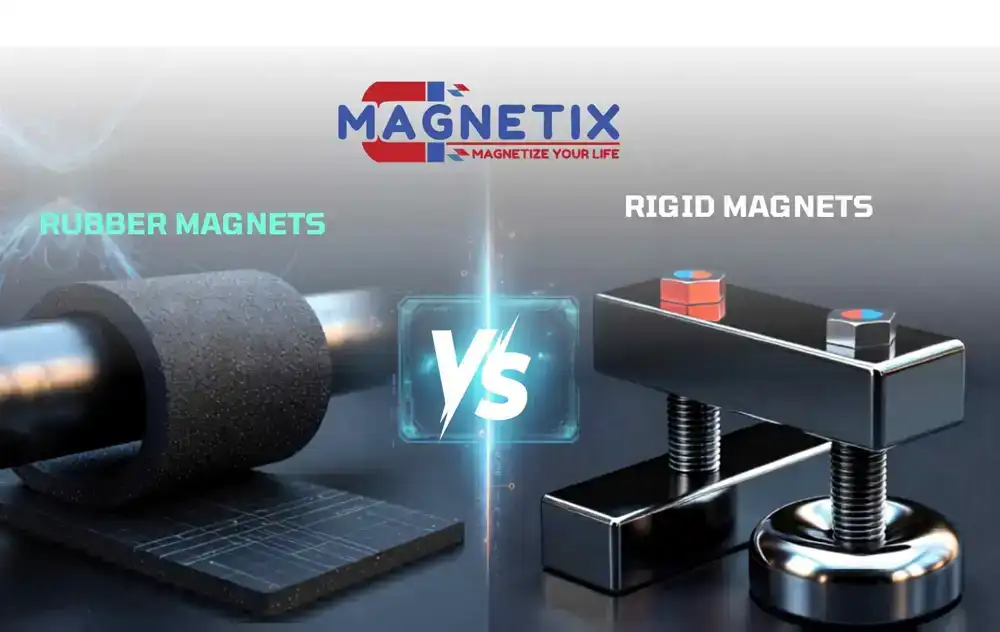
Understanding Rubber Magnets and Rigid Magnets
Engineers, manufacturers, and designers must understand the differences and applications for rubber magnets vs rigid magnets. There are various factors based on the application requirements that rubber magnets and rigid magnets each have advantages. These differences include flexibility, magnetic strength, temperature resistance, and cost.
Rubber magnets, also known as flexible magnets, combine ferrite powder with a polymer binder, such as PVC or rubber. These magnets are lightweight and malleable, allowing them to be cut and shaped easily. Their excellent printability and cost-effective nature make them widely used for promotional magnets, refrigerator magnets, vehicle signage, and magnetic labels.
Conversely, rigid magnets (including ferrite magnets, neodymium magnets (NdFeB), samarium cobalt (SmCo), and alnico magnets) are solid permanent magnets of high strength. Applications that require high magnetic force, precision, and durability use rigid magnets. Examples include electric motors, industrial equipment, automotive systems, and sensors.
Key Differences: Flexibility vs Strength in Magnets
Rubber magnets have low magnetic strength but a significant amount of flexibility, making them ideal for consumer products and advertising applications. Rigid magnets are superior in magnetic strength (up to 50+ MGOe) and are ideal for high-performance engineering applications.
Which Magnet Should You Choose for Your Application?
If your application requires custom-shaped magnets, lightweight materials, and printable magnetic surfaces, rubber magnets are the best choice. However, for high-strength magnets, compact size, and high-temperature environments, rigid magnets are the preferred solution.
Conclusion: Choosing Between Flexible Magnets and Rigid Magnets
Knowing the differences between flexible magnets and rigid magnets means you get the best performance for the least cost. When it comes to choosing the best magnet type for your application, whether it be for branding, packaging, or industrial engineering, the decision is based entirely on your specific needs.